
Analysed Data Includes
- Right/left force distribution
- Anterior/posterior force distribution
- Center of Pressure
- Feet angle
- Step length
- Step time
- Stair usage – height and time
- Slope usage – degree and time
- Parallel bars – 3 meter walk-time
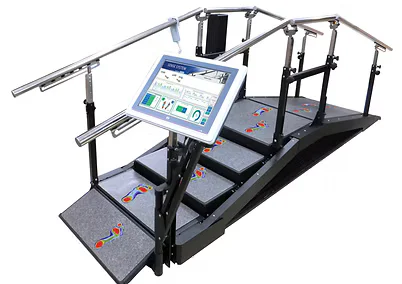
The benefits of real-time gait biofeedback in rehabilitation has already been proven to encourage significant and clinically relevant improvements (Gelder, 2017; Genthe, 2018). The DST Triple Sense takes these benefits to the next level by providing real-time feedback on patient’s performance in all three functionalities: stairs, slope, and parallel bars.
Physiotherapists must multi-task, keeping patients safe and motivated while maintaining correct posture, motion and more. The DST Triple Sense puts an end to this struggle by employing visual and auditory biofeedback to help patients regain control and stay motivated during the exercise. Physiotherapists can now guide and secure their patients throughout the course of the exercise without having to worry about its quality or missing compensations.
Using Pressure Mapping Technology for Enhanced Precision
In the world of physical therapy and rehabilitation, the ability to accurately assess a patient’s balance is crucial for designing effective treatment plans. One of the most trusted and widely used methods for evaluating balance is the Romberg Test.
Incorporating this test into routine therapy ensures that any changes in a patient’s balance are identified early, allowing for immediate intervention when necessary.
Analysed data includes:
Sway Area: The area covered by the CoP during the test, representing the overall stability of the patient.
Sway Velocity: The average speed at which the center of pressure moves, providing insights into how quickly a patient is struggling to maintain balance.
Right/Left and Anterior/Posterior Movement Range: The extent of displacement in the centre of pressure from a neutral standing position, revealing how much the patient compensates for balance issues.
The lack of evidence-based measuring tools makes it difficult to justify treatment to insurance companies. This in turn denies patients from maximising their rehabilitation potential in minimum time. DST Triple Sense bridges the technology void between the clinical and laboratory environments. Clinicians can now implement the most effective treatment for each patient based on hard evidence – without consuming precious lab resources such as time, space, and labour.